


Essential Travel Tips for Foreign Visitors to China
1. Entry Requirements
- ● Passport & Visa: Ensure your passport is valid for at least 6 months beyond your stay.
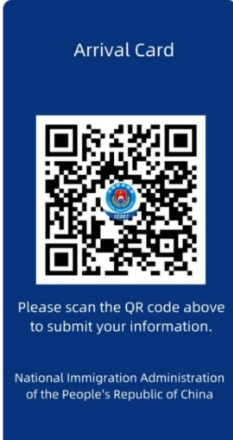
- ● Entry Card: Complete the Arrival Card before your arrival.
https://s.nia.gov.cn/ArrivalCardFillingPC/
2. Power & Electrical Sockets
- ● Voltage & Frequency: 220V / 50Hz
- ● Socket Types: 3 flat pins,2 flat pins

● Adapter Tip: Bring a universal travel adapter
3. Power Bank Rules
On Flights (Strict)
- ● Carry-on Only: Never put power banks in checked luggage—only in carry-on bags.
- ● Capacity Limit: Max 100Wh (≈20,000mAh). 100–160Wh needs airline approval; over 160Wh is banned.
- ● 3C Certification: Must have a clear CCC (3C) mark (China Compulsory Certification).
- ● Label Requirement: Brand, capacity, and model must be clearly printed (no faded/damaged labels).
- ● Quantity: Max 2 power banks per person
- ● In-Flight Use: Do not use or charge power banks during the flight; keep them turned off
On High-Speed Trains
4. Train (High-Speed & Conventional) Luggage Rules
Prohibited: Weapons, explosives, flammable items, knives, and pets (except guide dogs)
- A. Daily drinks and water are allowed; you may be asked to take a sip for inspection.
- B. Sealed and well-marked alcoholic drinks with alcohol volume content between 24% and 70%, total carrying volume shall not exceed 3000ml.
-
C. Non-aerosol daily goods containing flammable ingredients such as perfume, toilet water, sprays and gel: each single container shall not exceed 100ml, maximum 1 piece per item.
Total volume of nail polish and nail polish remover shall not exceed 50ml. - D. Aerosol containers including hair perm lotion, hair dye, hair mousse, hair spray, pesticide and air freshener: each single container ≤150ml, 1 piece per type, total volume ≤600ml.
5. Differences Between Second Class, First Class & Business Class on China’s Bullet Trains
1. Second Class — Standard Economical Option
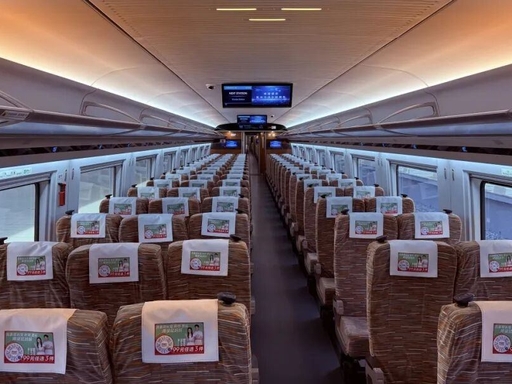
- ● Seat layout: 3 seats on one side of the aisle, 2 on the other (3+2). Seats are marked A(window), B(middle), C(aisle) / D(aisle), F(window).
- ● Space & recline: Narrowest seats (46cm wide) with limited legroom. The backrest only tilts up to 24 degrees, no footrests.
- ● Facilities: Small foldable tray tables attached to front seat-backs, shared power outlets between seats. No free food or dedicated pillows.
- ● Price: The cheapest tier; all other classes cost more based on this baseline.
- ● Suitable for: Short to medium trips under 4 hours, budget travelers.
2. First Class — Mid-Tier Premium Upgrade
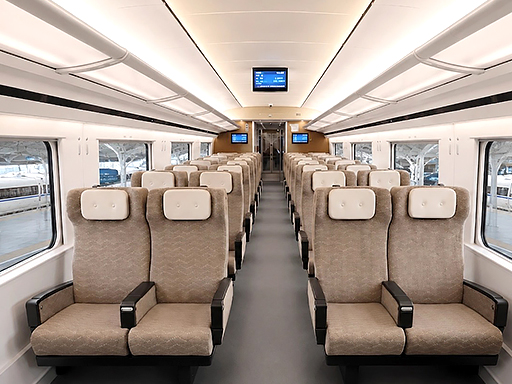
- ● Seat layout: 2 seats on each side of the aisle (2+2). No middle seats; every seat is either window (A/F) or aisle (C/D).
- ● Space & recline: Wider seats (53cm) and much larger legroom. Backrest reclines up to 60 degrees, equipped with retractable footrests and adjustable soft headrests / small pillows.
- ● Facilities: Foldable tray tables hidden inside armrests, individual power sockets on each armrest, reading lamps. The cabin is quieter with fewer passengers. Free bottled water and simple snacks are provided on some routes.
- ● Price: Around 1.5–1.8 times the fare of second class.
- ● Suitable for: Medium-long journeys over 4–5 hours, travelers who prefer more quiet and space.
3. Business Class — Top Luxury Tier
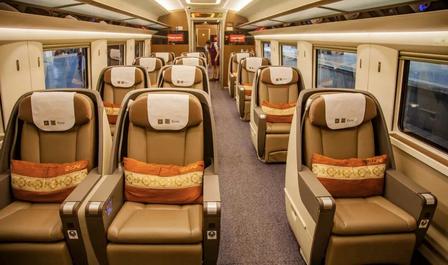
- ● Seat layout: Ultra-spacious 2+1 or exclusive 1+1 single seat layout. Carriages are separated by automatic doors for full privacy.
- ● Space & recline: Oversized leather sofa seats (58–62cm wide) with extra-wide legroom. Seats can fully recline 180° into a flat bed (180–190cm long), complete with leg rests, lumbar support and massage functions.
- ● Facilities: Independent small TV screens, private reading lights, disposable slippers, blankets and full-size pillows. Passengers can access exclusive station VIP lounges before boarding, with free drinks, snacks and hot meals served onboard by dedicated attendants.
- ● Price: 3–4 times more expensive than second class, the priciest seat category.
- ● Suitable for: Long-distance overnight trips, business travelers requiring rest and full premium service.
6.How to Take Train in China
- A. Arrive at the station- Arrive at least 45–60 minutes before departure.
- B. Security check:go through baggage and security inspection.
- C. Check in & enter the waiting room. Show and scan your passport to enter the waiting room.
- D. Wait for boarding: Check the big screen for your check-in gate number and wait for boarding.
- E. Find your platform number on the screen of the Check-in gate.
- F. Scan your passport at the check-in gate to enter the platform.
- G. After enter the platform, please find your correct boarding position at the platform for your cabin by checking the color-coded floor markers on the platform (it’s indicated on the screen of the check-in gate).
7. Payment in China
A. Mobile QR Payment (Alipay / WeChat Pay) —Primary daily payment (Recommended)
- Pre-trip Preparation (Do this before arriving in China)
- 1) Download apps from official App Store / Google Play
- 2) Alipay: Standalone app, full English interface, friendlier for tourists
- 3) WeChat (Weixin): Messaging app with built-in WeChat Pay function
- 4) Required documents: Valid passport, Visa/Mastercard/JCB/Discover card (name on card must match passport exactly), your home mobile number (no Chinese SIM needed)
- 5) Do NOT use VPN during registration & payment — VPN triggers transaction failures
- Quick Setup Steps for Foreigners
- 1) Register with your home country phone number & SMS verification code
- 2) Complete real-name verification: Upload passport photo page + live face selfie
- 3) Link your international credit card; set a separate 6-digit payment PIN
- 4) Make a tiny test purchase (bottled water, subway ticket) to confirm success
- Key Practical Tips
- 1) Spending limits: Unverified accounts ≈ ¥1,000 daily cap; passport-verified accounts up to ~$50,000 annual spending
- 2) Fees: 0 surcharge for small transactions under ¥200; 2%–3% cross-border fee for larger payments, plus your bank’s foreign exchange fee
- 3) Coverage: Accepted at street stalls, cafes, grocery stores, souvenir shops, taxis, scenic spots, convenience stores
B. RMB Cash — Mandatory legal backup
cash RMB is legally accepted everywhere for face-to-face transactions in China, and it is illegal for merchants to refuse cash without valid reasons.
- Practical travel tips for you
- 1. Carry small RMB notes (¥5, ¥10, ¥20, ¥50) instead of only ¥100 large bills—vendors will have an easier time giving you change.
- 2. Exchange or break big cash at hotel front desks, large supermarkets, or bank branches to get small denominations.
- 3. Cash works perfectly as a backup: if your foreign credit card fails, your phone loses signal/battery, or you cannot set up Chinese mobile payment apps, cash will save you trouble.
- 4. You can withdraw RMB cash from most downtown ATMs with Visa/Mastercard international cards.
C. International Credit/Debit Cards (Visa/Mastercard/Amex), UnionPay Cards
Where they work reliably:
Hotels, airport duty-free shops, supermarkets, shopping malls, restaurants, big chain Western cafes
Where they almost never work:
Street food stalls, local small restaurants, convenience stores, taxis,rural scenic spots
8. Additional Useful Tips
Internet & VPN: Major hotels/cafes offer free Wi-Fi. Note that Google, Facebook, Instagram, and WhatsApp are blocked—use WeChat (most popular) or VPN (install before arrival).

