


Qiyun Mountain
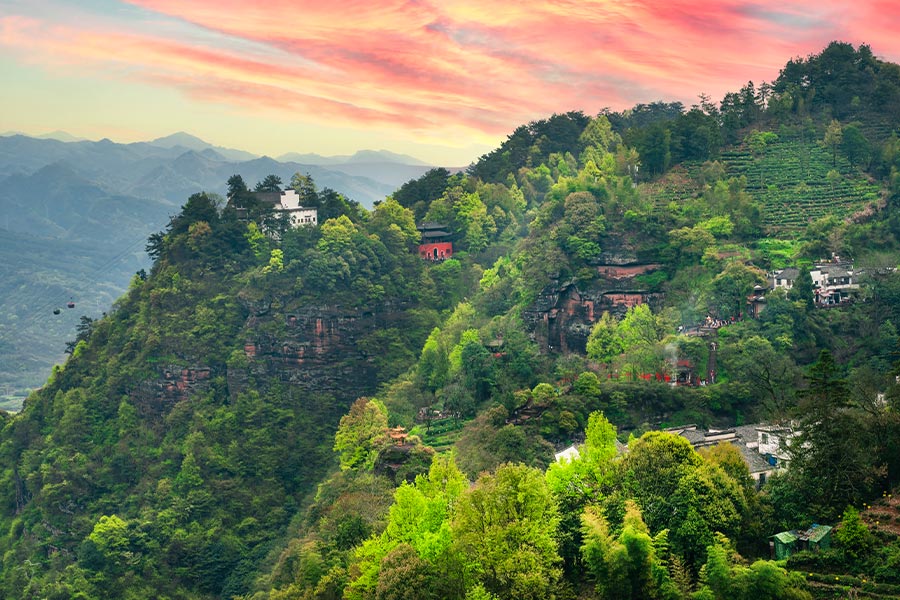
Chinese name: 齐云山 (Qiyun Shan)
Location: Qiyunshan Town, Xiuning County, Huangshan City, Anhui Province (approximately 33 kilometers west of Huangshan urban area).
Opening time: Generally open during daytime hours; last entry and cable car service end in the late afternoon. Opening hours may vary by season. Please check the official channels before your visit.
Recommended time for a visit: 4–5 hours (a full loop), or 1–2 days for an in-depth visit.
How to get there:
By High-speed Rail: Take the high-speed train to Huangshan North Station, then take a taxi (about 25–40 minutes) or the Xiuning No.1 bus directly to the scenic area.
By Car: Navigate to “Qiyunshan Visitor Center”; parking is available.
Introduction to Qiyun Mountain – A Taoist Fairyland on the Cliff, the “First Mountain of Jiangnan”
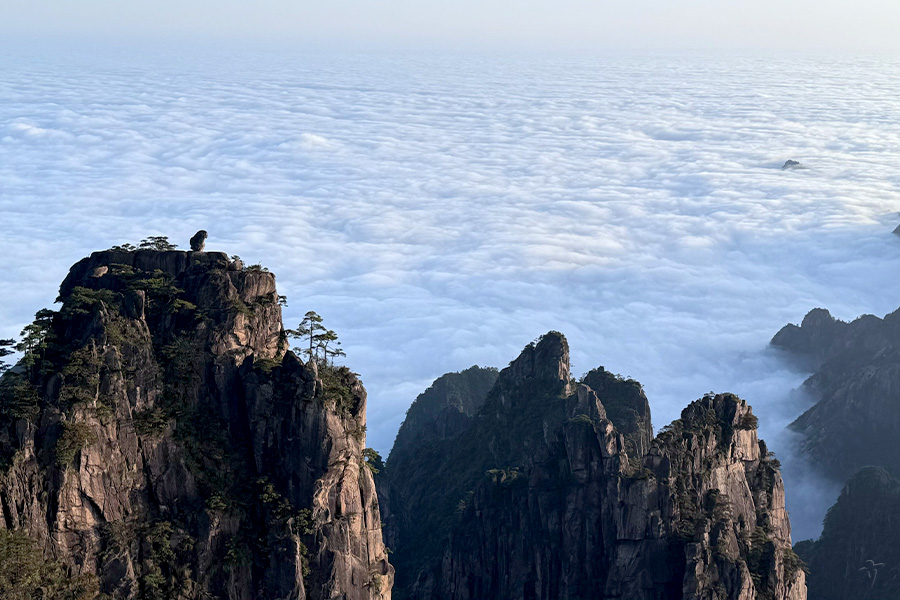
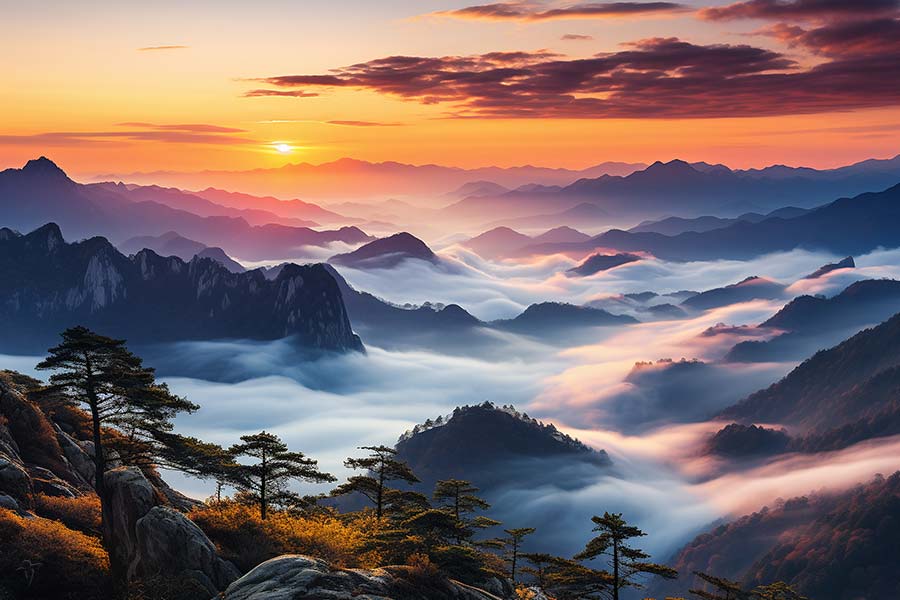
Qiyun Mountain, anciently known as Baiyue, is located in Xiuning County, about a 30-minute drive from Huangshan City. It is one of the Four Great Taoist Mountains of China, a National Geological Park, and a National 4A-rated scenic area. Emperor Qianlong of the Qing Dynasty praised it as “the unmatched wonder under heaven, the finest mountain south of the Yangtze.” The main peak stands at 585 meters above sea level, featuring typical Danxia landform (red sandstone formations). With over 260 days of cloud sea annually, it is renowned as the “world’s lowest cloud sea.” The famous Ming Dynasty traveler Xu Xiake visited Qiyun Mountain twice and recorded his journeys in his travel diaries.
Features of Qiyun Mountain
Yuehua Street (月华街, Cliff top ancient settlement) – An Ancient Village on the Cliff
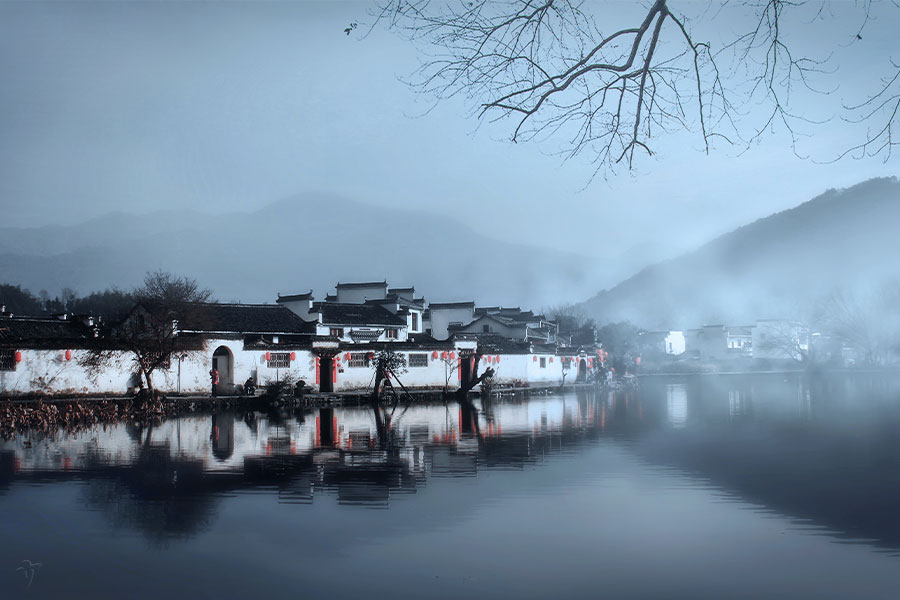
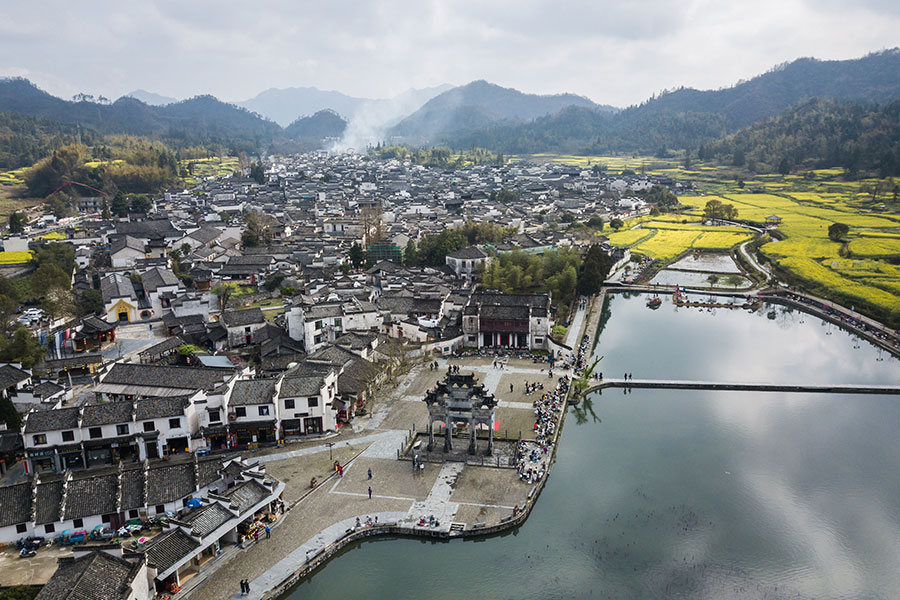
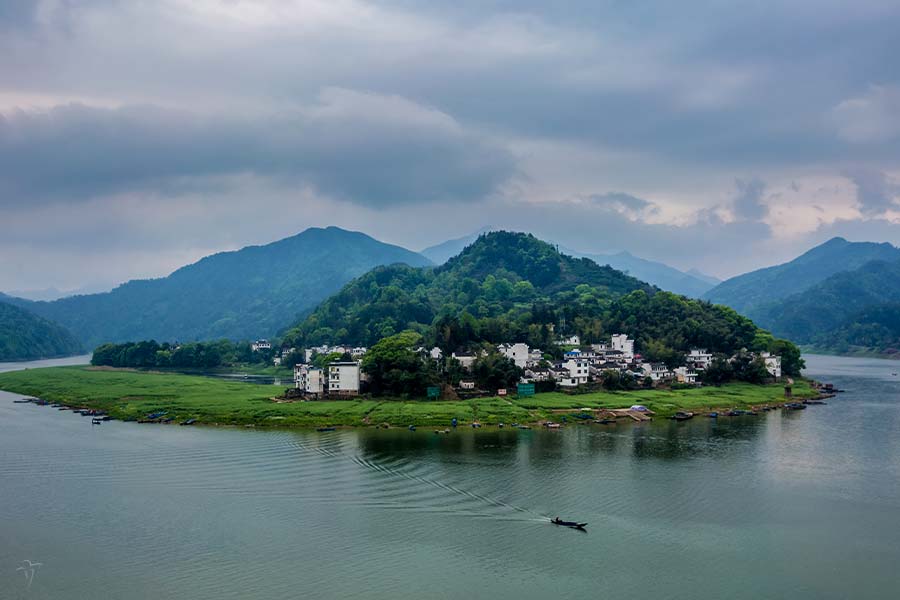
A unique feature of Qiyun Mountain is the settlement known as Moon Flower Street, perched on the cliffside halfway up Qiyun Mountain. Taoist priests and villagers live together in this community, with white-walled, black-tiled Huizhou-style buildings blending seamlessly with Taoist temples. In misty weather, the village appears like a fairyland suspended in the clouds.
Danxia Landform and Cloud Sea
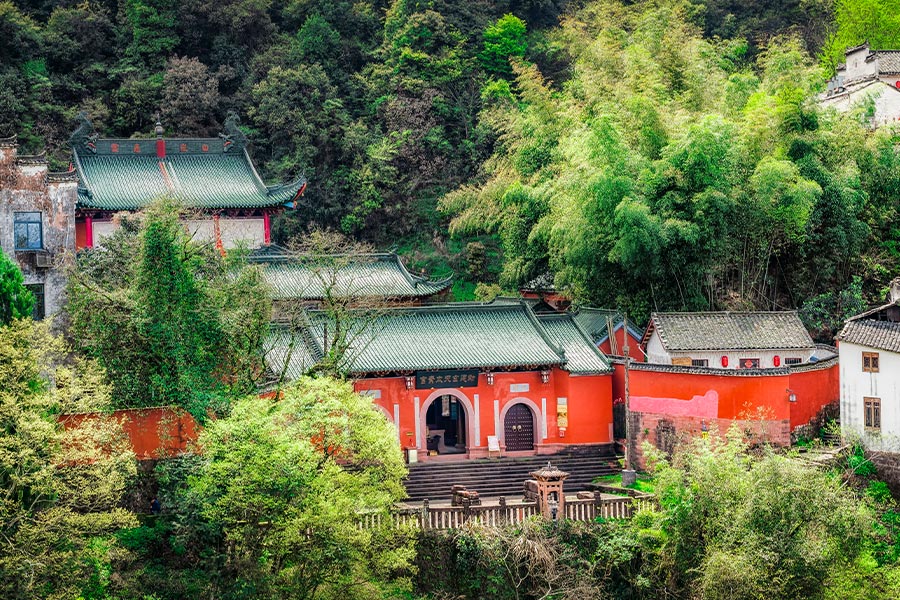
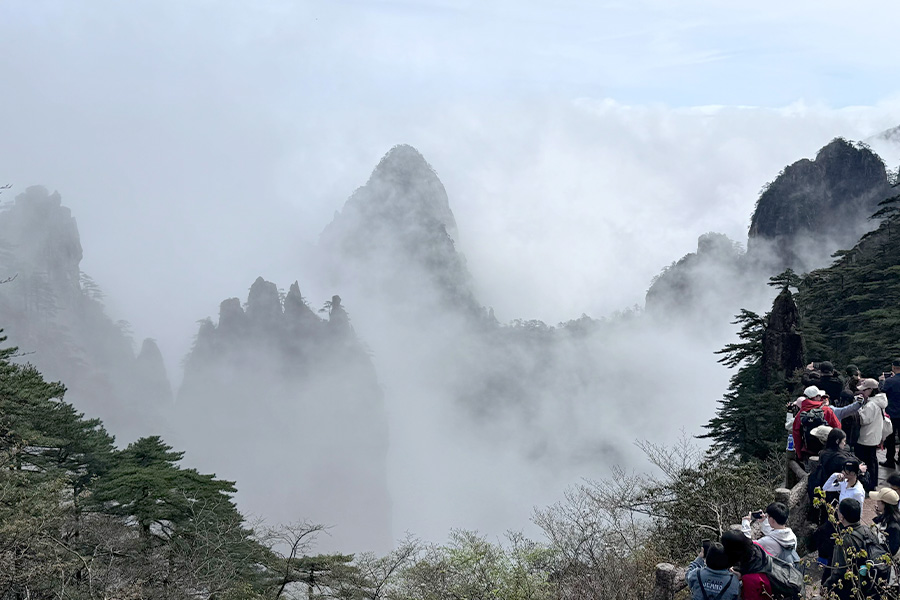
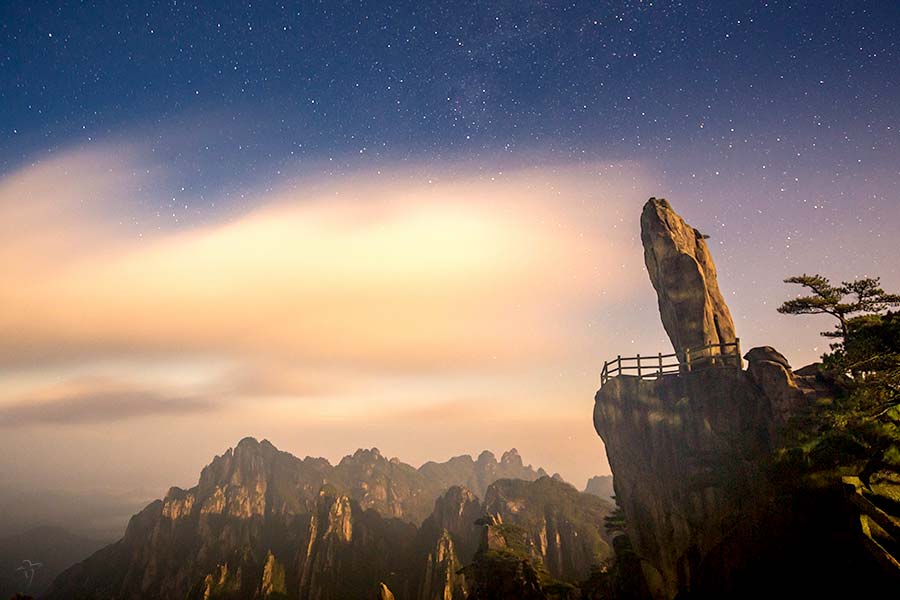
Qiyun Mountain is celebrated for its Danxia landform, characterized by red sandstone cliffs and peculiar rock formations. The cloud sea is a year-round spectacle, with over 260 days of cloud and mist annually. The best spots to appreciate the cloud sea include the summit and various viewing platforms along the hiking trails.
Cliff Inscriptions and Taoist Heritage
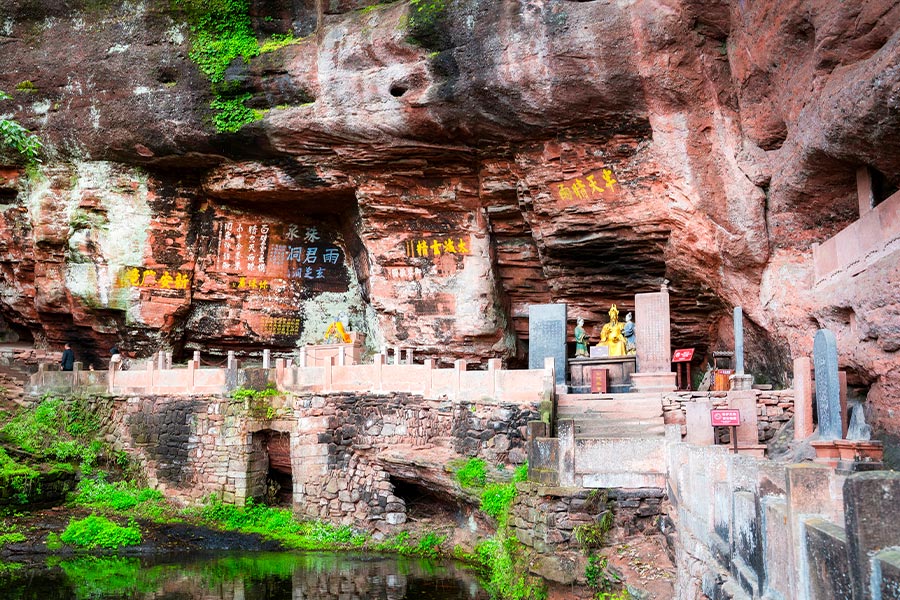
The mountain boasts over 500 inscriptions carved into cliff faces, spanning from the Tang Dynasty to modern times. Notable examples include the giant “Longevity” (寿) character written by Zhu Xi, and the “Purple Heaven Palace Stele” inscribed by Tang Bohu (Tang Yin). Taoist temples such as the Yuxu Palace () and Taisu Palace (太素宫) are important sites of Taoist worship, some built directly into the Danxia cliff walls.
The Immersive Night Tour – “Baiyue Night Carefree” (白岳夜逍遥)
In recent years, Qiyun Mountain has developed a nighttime tourism brand called “Baiyue Night Carefree,” featuring intangible cultural heritage performances such as fish lantern dances, molten iron fireworks (打铁花), and fire pot shows (火壶演艺). The “Qiyun Carefree Street” (齐云逍遥街) offers interactive performances with “immortal, knight, hermit, and scholar” themes, creating an immersive ancient-style experience.
What to See in Qiyun Mountain
•Yuxu Palace (玉虚宫): A Taoist palace embedded in the Danxia cliff, preserving Tang Bohu’s handwritten stele “Purple Heaven Palace Stele Inscription.”
•Cliff Inscriptions: The “Heaven Opens Divine Beauty” (天开神秀) inscription near the True Immortal Cave Mansion is particularly spectacular.
•Small Pot of Heaven (小壶天): A gourd-shaped stone gateway; legend says Lü Dongbin once practiced alchemy here.
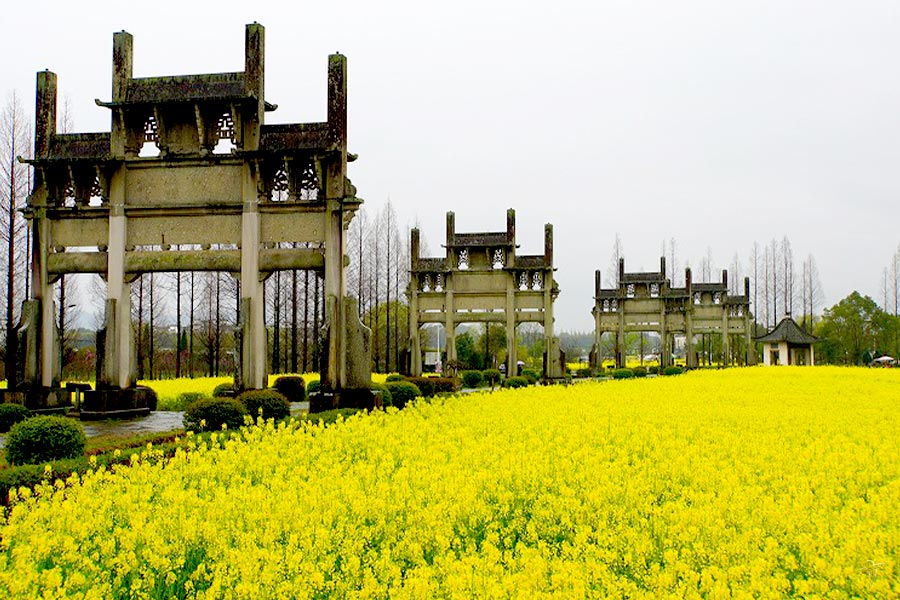
•Dengfeng Bridge (登封桥): A 9 arch ancient bridge built in the Wanli reign of the Ming Dynasty (over 400 years old), once the main route to Qiyun Mountain.
•Fang La Camp (方腊寨): A steep cliffside plank road leading to a cloud-piercing viewpoint, offering spectacular photo opportunities.
Huangshan tours
Quick Questions
Our team is waiting for your questions. Please feel free to ask us any questions you might have about our China package tours, Chinese culture, or the sites available. We will gladly help you with any special needs you might have and all questions, like our trip designing is completely free of charge.

