


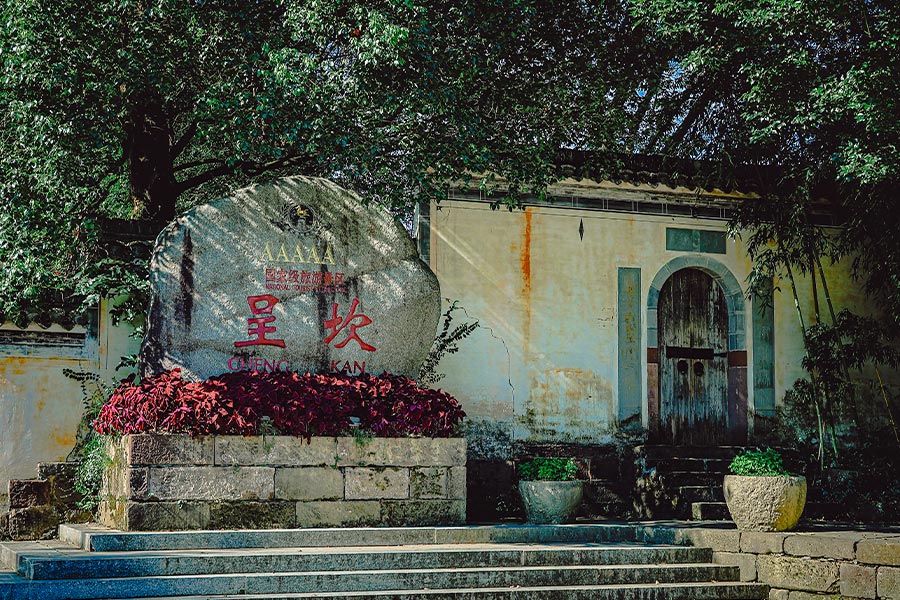
Chengkan Ancient Village
Chinese name: 呈坎 (Chengkan)
Location: Chengkan Town, Huizhou District, Huangshan City, Anhui Province (approximately 15 kilometers from Huizhou District center, about 40 kilometers from Huangshan Scenic Area).
Opening time: Generally open during daytime hours, with extended hours in summer. Opening hours may vary by season. Please check the official channels before your visit.
Recommended time for a visit: 2–3 hours (a leisurely walk through the village), or 4–5 hours if including a guided tour and the surrounding area.
How to get there:
•By High-speed Rail: Take the high-speed train to Huangshan North Station, then take a taxi (about 25–30 minutes) or Bus No. 17 directly to Chengkan Scenic Area.
•By Car: Navigate to “Chengkan Scenic Area South Gate Parking Lot”; parking is available.
Introduction to Chengkan – The Bagua Village, “No Hardships in Life”
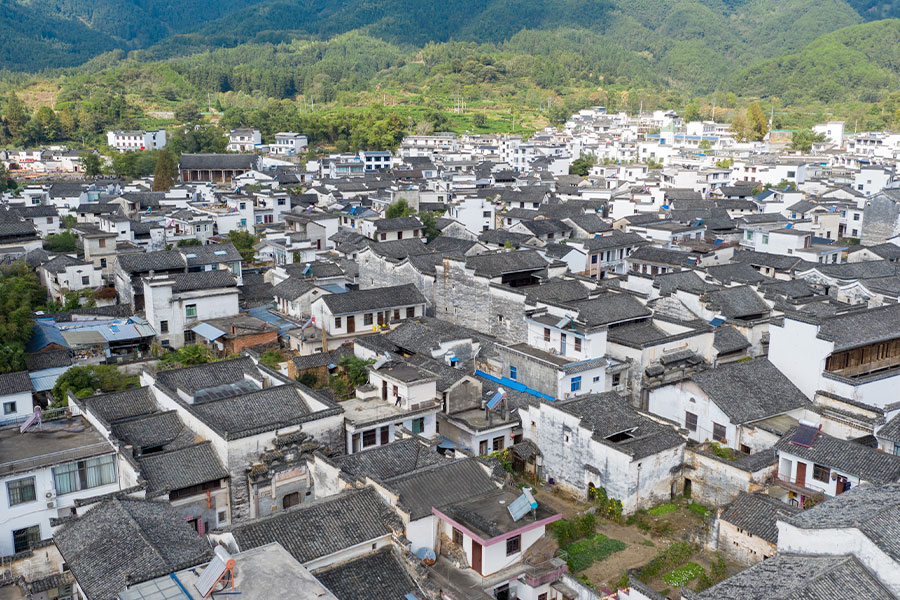
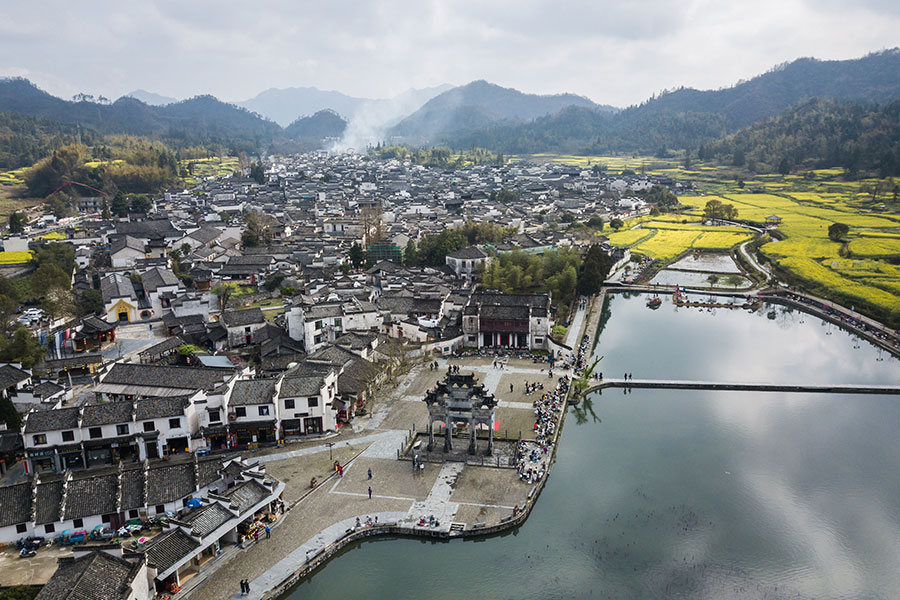
Chengkan is not just another ancient village. It is a place where the principles of the I Ching (Book of Changes) were literally written into the landscape. The village name itself derives from the trigrams: Cheng (呈) corresponds to Yang, and Kan (坎) corresponds to Yin—together representing the unity of opposites, the balance of heaven and earth. This philosophical foundation is not merely decorative; it shapes the entire layout of the village, which was designed according to Bagua (Eight Trigrams) feng shui theory, with the Longxi River curving through in an S-shape to form the dividing line between Yin and Yang.
Founded over 1,800 years ago during the Eastern Han Dynasty, Chengkan is one of China‘s best-preserved ancient villages, home to more than 150 ancient buildings from the Song, Yuan, Ming, and Qing dynasties. Zhu Xi, the great Neo-Confucian scholar, praised it as “the finest village south of the Yangtze”. The village is also celebrated for its unique distinction of having “two national cultural heritage sites within one village” — referring to the Luodongshu Ancestral Hall (including Baolun Pavilion) and the Chengkan ancient building complex of 48 historic structures.
Features of Chengkan
The Bagua Layout and “No Hardships in Life”
The village’s layout is its most distinctive feature. Streets and alleys wind in patterns that mirror the eight trigrams, with 99 lanes forming what locals call a “maze”. The village faces east with its back to the mountains, following the classical feng shui principle of “backing onto hills, facing water, with a screen in front”. A popular saying captures the emotional appeal of visiting: “Enter Chengkan, and you’ll have no hardships in life” (游呈坎,一生无坎). This phrase, derived from the village’s name and layout, has become a blessing that visitors carry with them.
Luodongshu Ancestral Hall (罗东舒祠) – “The Finest Ancestral Hall in Jiangnan”
The Luodongshu Ancestral Hall is the architectural crown jewel of Chengkan and a designated National Key Cultural Relic Protection Unit. Built in 1611 during the Ming Dynasty, it is celebrated as the “finest ancestral hall in Jiangnan” for its grand scale and exquisite craftsmanship. The hall’s rear building, Baolun Pavilion (宝纶阁), is the highlight—an 11-bay structure with stunning painted beams that have retained their vibrant colors for over 400 years. The hall also houses valuable plaques inscribed by historical figures including Dong Qichang (Ming dynasty calligrapher) and Lin Zexu. Four golden nanmu columns support the structure, and the wood carvings are considered among the finest in Huizhou architecture.
Yongxing Lake and the Night Fish Lantern Parade
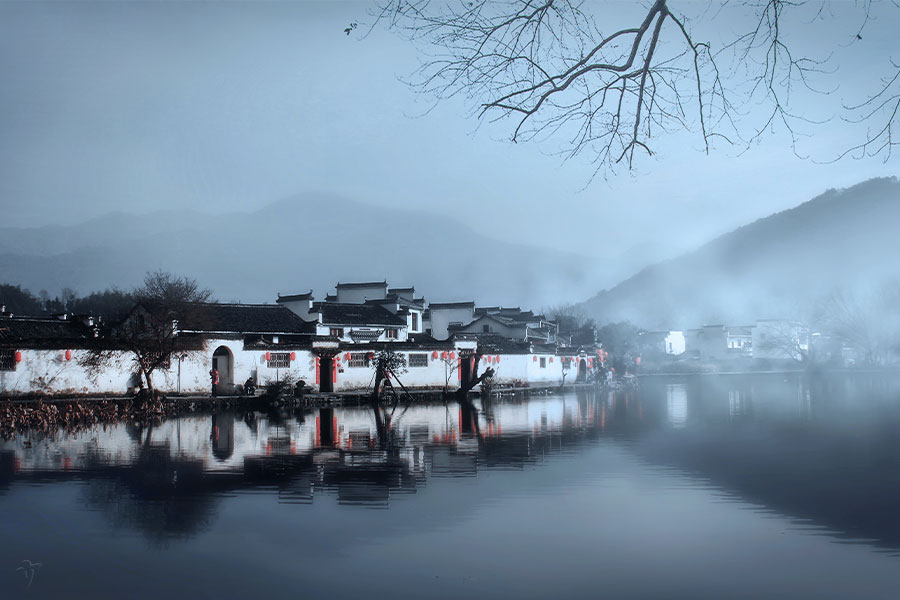
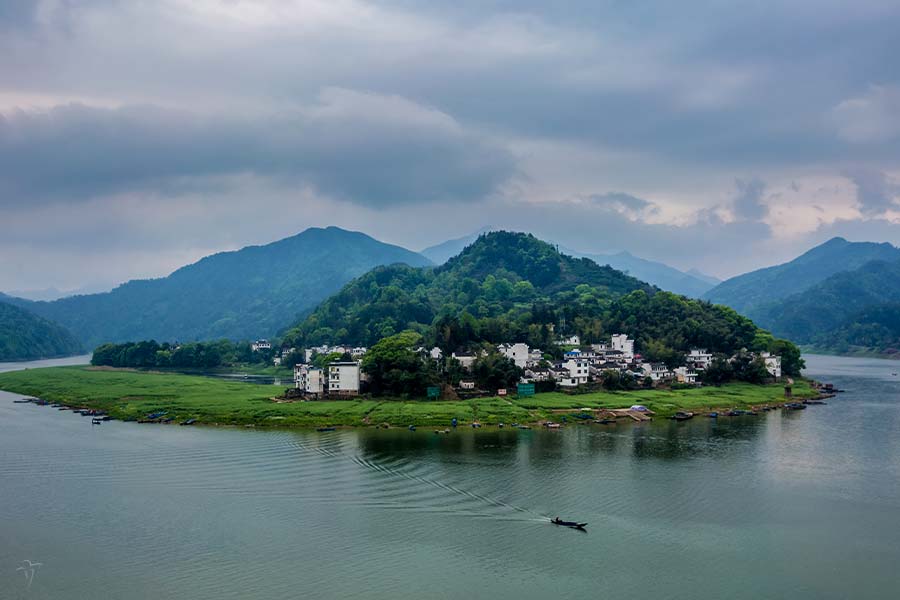
Yongxing Lake (永兴湖) sits at the village entrance, reflecting the whitewashed walls and dark tiles of the surrounding buildings in a scene that looks like an ink painting. In the evening, the village comes alive with a fish lantern parade (鱼灯巡游), a traditional Huizhou folk custom now integrated into the tourism experience. Visitors can watch or even join the procession as illuminated fish lanterns wind through the ancient alleys, creating a magical atmosphere.
What to See in Chengkan
•Luodongshu Ancestral Hall / Baolun Pavilion (罗东舒祠/宝纶阁): The village’s architectural masterpiece; the essence of Huizhou ancestral hall design.
•Yongxing Lake (永兴湖): Best for photography, especially in early morning mist or at dusk.
•Bagua Gate (八卦门): A popular photo spot where visitors “cross the threshold” for good fortune.
•Yan Yi Hall (燕翼堂): A Ming dynasty residence with rare architectural details.
•Huanxiu Bridge (环秀桥): One of the village‘s oldest structures, offering views over the rooftops.
•Luo Runkun Residence (罗润坤宅): A typical Ming dynasty dwelling with distinctive “flying chairs” (美人靠).
Best Time to Visit
Early morning (before 7:00) offers the quietest atmosphere and the best chance to catch mist over Yongxing Lake. Late afternoon (after 16:00) provides soft light for photography. The evening is ideal for experiencing the fish lantern parade and the illuminated village.
Huangshan tours
Quick Questions
Our team is waiting for your questions. Please feel free to ask us any questions you might have about our China package tours, Chinese culture, or the sites available. We will gladly help you with any special needs you might have and all questions, like our trip designing is completely free of charge.

