


Guilin Transportation
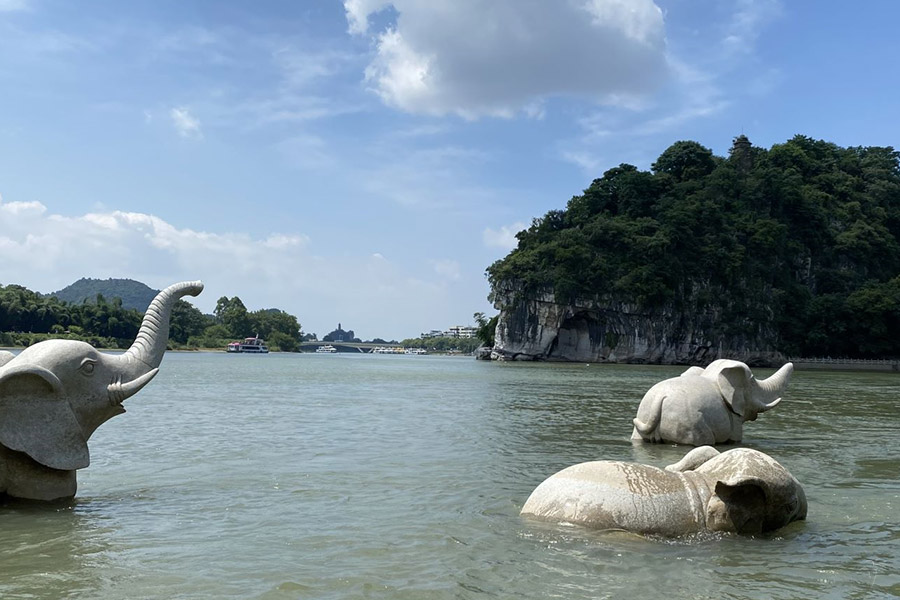
Guilin has convenient transportation links, with well-developed airport and high-speed rail networks that provide easy access to the city and surrounding attractions.
Airport
Guilin Liangjiang International Airport is located in Liangjiang Town, Lingui District, approximately 28 kilometers from downtown Guilin and about 90 kilometers from Yangshuo County.
● Airport Shuttle Bus: In June 2026, the routes were optimized to provide direct access to major attractions, including Elephant Trunk Hill, Two Rivers and Four Lakes, and East-West Alley, without requiring a transfer. The trial period ended on August 8, 2026. The current fare from the airport to scenic areas is RMB 25 per person.
● Qintan Passenger Transport Station City Terminal: Buses depart for the airport hourly from 09:20 to 17:20. The journey takes approximately 35–40 minutes.
● Taxi: A taxi from downtown to the airport costs approximately RMB 80–100 and takes about one hour.
Guilin has opened international direct flights to Hanoi, Vietnam, as well as Seoul, Cheongju, and Daegu in South Korea. The city now has international air links to eight destinations.
High-Speed Rail Network
Guilin has excellent high-speed rail connections. Guangzhou, Guiyang, and Nanning can be reached in approximately two hours, while Changsha is about three hours away.
The city has four railway stations:
● Guilin North Railway Station: The busiest high-speed rail hub, with more than 300 trains departing daily. A taxi ride to downtown takes approximately 15 minutes and costs RMB 20–30. It is the preferred station for most travelers.
● Guilin Railway Station: Located in the city center, approximately a 10-minute walk from Elephant Hill Park. It is convenient for families and elderly travelers, but the number of trains is relatively limited, so tickets should be purchased early.
● Yangshuo Railway Station: Located in Xingping Town, this is the most convenient railway station for reaching Yangshuo and can save approximately one hour of travel compared with other stations. After exiting the station, travelers can take a scenic-area shuttle bus to West Street. The journey takes approximately 40 minutes and costs RMB 20.
● Guilin West Railway Station: Located approximately 20 kilometers from downtown. A taxi ride takes around 40 minutes and costs approximately RMB 50. Because of its relatively remote location, it is best used only as a backup option.
Ticketing Information: Under current railway regulations, children aged 6 to under 14 are eligible for discounted child tickets, although the discount is not necessarily exactly 50%. Passengers aged 14 and above must purchase full-price tickets. Each adult may bring one child under the age of six free of charge, provided the child does not occupy a separate seat. Guilin Railway Station mainly serves high-speed and bullet trains, while most conventional trains stop at Guilin North Railway Station. Always check the actual train information on the official 12306 platform and confirm the station name before traveling.
Local Transportation
Because Guilin is located in a karst region, the city does not have a subway system. Public buses serve major attractions such as Elephant Trunk Hill, Seven Star Park, Jingjiang Princes’ City, and Two Rivers and Four Lakes. As of September 17, 2026, air-conditioned public buses in Guilin charge a uniform fare of RMB 2 per ride. Operating hours are approximately 07:00--22:00.
The starting fare for taxis is RMB 9. A taxi ride between attractions within the city usually costs approximately RMB 10–20. Shared electric scooters can be rented by scanning a QR code and are suitable for short-distance travel.
Water Transportation
Guilin’s waterways are connected to the Xiang River and the Li River. Historically, this water network served as an important transportation route between the Yangtze River basin and the Pearl River basin. Boats could travel along the Li River to Wuzhou and then continue through the Pearl River to Guangzhou, Hong Kong, and Macao.
However, with the development of air and road transportation, traditional long-distance passenger services by water have declined significantly. Sightseeing cruises and bamboo-raft trips are still available along the most scenic section of the Li River. Specific arrangements are subject to the scenic area’s announcements on the day of travel.


